
Why movement is crucial for your horse’s hoof health
Updated: Nov 9, 2025
In a hurry? Here's a super condensed version of this blog post!
TL;DR : Movement isn’t just good for fitness - it’s absolutely essential for your horse’s hoof health. Every part of the hoof, from the digital cushion and frog to the laminae and hoof wall, depends on regular movement to develop properly, stay strong, and function as nature intended. Without enough movement, hooves become weak, prone to problems like thrush, laminitis, cracks, and even structural lameness. If you want healthy hooves, supporting and encouraging free, natural movement is one of the most powerful things you can do.
Want to dive deeper? Here's the full blog post!
Why movement is crucial for your horse’s hoof health
We all know that movement is important for horses, but when it comes to hoof health, it’s not just a nice bonus - it’s absolutely vital. Every structure inside the hoof, from the deepest bones to the outer wall, relies on regular, consistent movement to develop properly, function well, and stay healthy.

Let’s break down how movement affects each major part of the hoof:
The digital cushion
The digital cushion (the horse's heelbulbs) is a fibrous, elastic structure at the back of the hoof. It acts as a natural shock absorber, protecting joints and bones from impact. Movement compresses and decompresses the digital cushion with every step, stimulating blood flow, strengthening the tissues, and keeping it elastic and resilient. Without enough movement, the digital cushion weakens or never develops properly, leading to problems like toe-first landings and long-term lameness risks.

The frog
The frog is designed to receive pressure with each step, helping to support circulation inside the hoof. Without stimulation from movement, the frog can atrophy, shrink, and become vulnerable to infections like thrush. A healthy, active frog is key to overall hoof function - and regular movement is what keeps it strong.

The sole
Movement promotes healthy sole growth by stimulating the production of tough, resilient sole tissue. Depending on the surfaces the horse moves on, it can also help naturally exfoliate the sole, preventing buildup of old, retained sole that can lead to imbalance or infections.
Plus, movement can help the sole wear more evenly, therefore playing a part in hoof balance and comfort. However, movement as a "natural trimming method" should rarely replace regular hoof trims! For true hoof health, your horse's hooves still need to be balanced with a frequent, accurate hoof trimming.

The hoof wall
Movement is critical for stimulating healthy hoof wall growth. With every step, blood flow improves, delivering the nutrients needed for a strong, durable hoof wall. Regular movement can help prevent cracking, splitting, and thin, brittle walls by ensuring even wear and adaptive strength - although again, this is dependant on the surfaces that the horse moves on and how the hoof is trimmed.
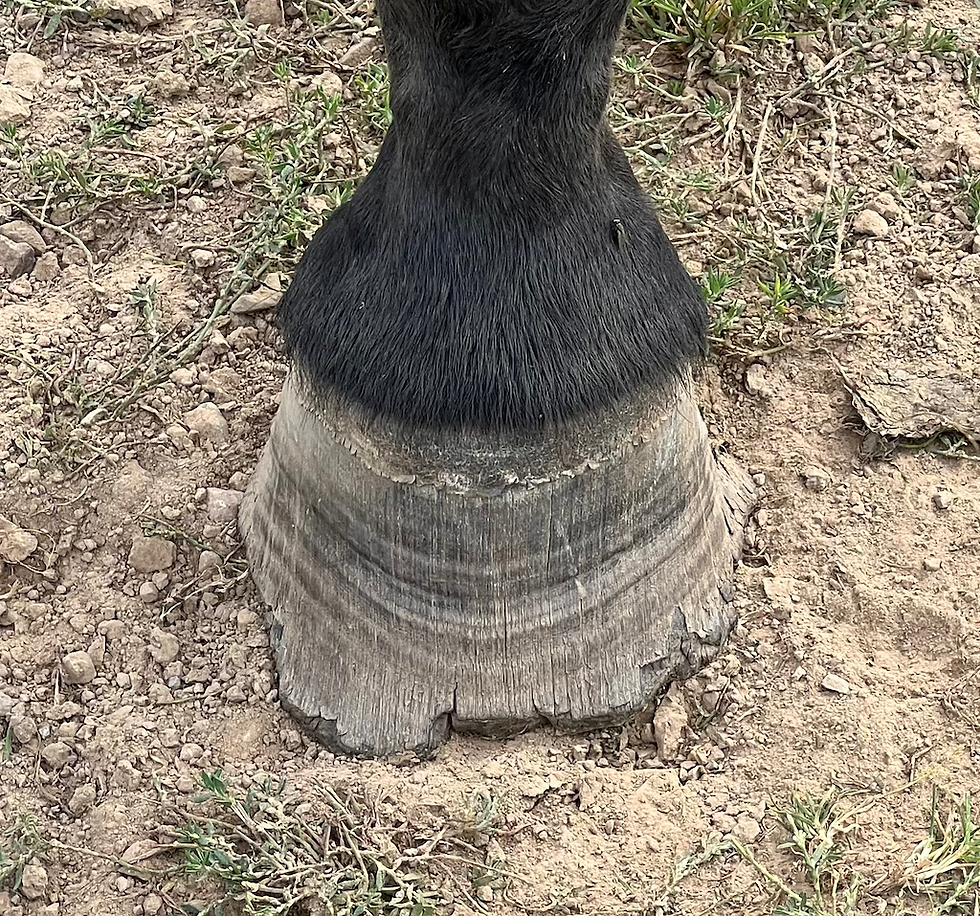
Below is a hoof photo of a horse that lives out 24/7/365 and therefore moves as much as a regular domesticated horse is generally expected to. But he lives on a soft field of grass and the hooves are not trimmed very often at all - and this is the result.
The pedal bone (coffin bone)
Movement keeps the pedal bone healthy by maintaining good bone density, proper alignment, and effective support within the hoof capsule. Good circulation and load-bearing activity prevent weakening of the bone, and they reduce the risk of serious conditions like laminitis.
The laminae
The laminae connect the hoof wall to the internal structures of the hoof. Movement boosts circulation to the laminae, supplying it with vital nutrients and oxygen, while helping prevent inflammation and weakening that could lead to laminitis. Laminitis is essentially a lack of nutrition (blood) to the laminae.
Tendons and ligaments
Tendons and ligaments around the hoof, such as the deep digital flexor tendon and various supporting ligaments, stay healthy and flexible through movement. Exercise stimulates healthy remodelling of these tissues, helps prevent strain injuries, and ensures they continue to stabilise the hoof and limb properly.

In conclusion
If you want strong, healthy hooves, you must prioritise movement. Confining horses, keeping them in stalls or small yards, or limiting their daily movement drastically impacts hoof development and health.
The more you can provide opportunities for natural, varied, continuous movement, the more you’ll support healthy hooves — and a sound, happy horse.
Do you want to learn even more, and become an EMPOWERED hoof carer for your horse?


